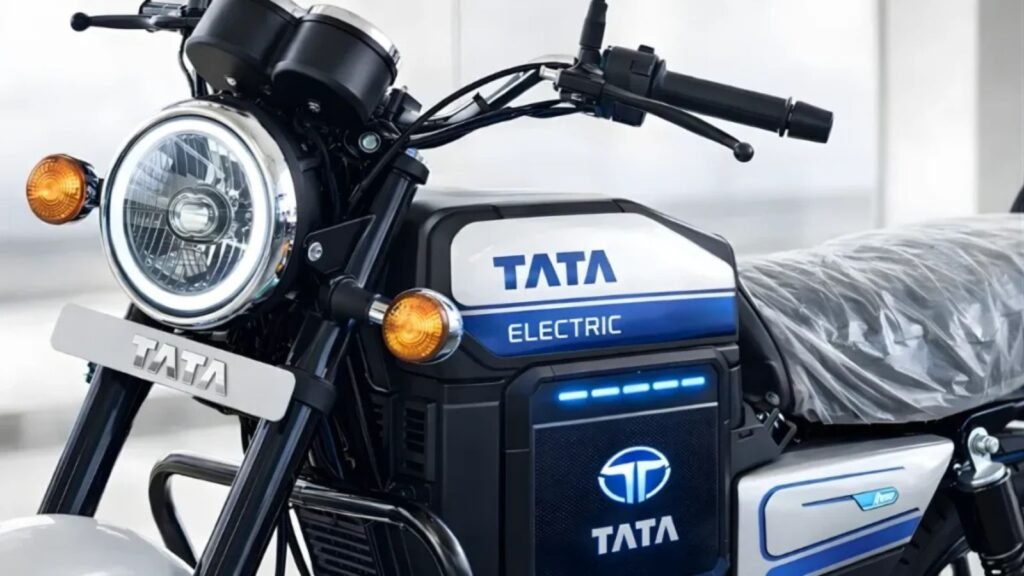
India’s electric vehicle revolution is moving faster than ever. What started as a slow transition toward eco-friendly mobility has now become a serious shift in consumer preference. Rising fuel prices, increasing maintenance costs of petrol vehicles, and growing awareness about environmental sustainability have pushed buyers to explore electric options more actively. In the middle of this changing landscape, news about a highly affordable Tata Electric Bike has captured widespread attention across social media and online platforms.
According to viral reports, this new Tata Electric Bike could be priced at around ₹30,000, offer a claimed riding range of 200 kilometers on a single charge, and deliver a top speed of up to 100 km/h. These numbers sound extremely ambitious, especially at such a low price point. While official confirmation from Tata Motors is still awaited, the discussion alone has created significant excitement among daily commuters, students, delivery riders, and motorcycle enthusiasts.
Let’s take a closer and more detailed look at why the rumored Tata Electric Bike is generating so much curiosity and what it could mean for India’s two-wheeler market if these claims turn out to be accurate.
A Price That Immediately Turns Heads
The biggest talking point surrounding the rumored Tata Electric Bike is its reported ₹30,000 price tag. In today’s Indian market, even entry-level petrol motorcycles cost much more than this. Electric motorcycles currently available are usually positioned at a significantly higher price range, especially those offering good performance and long range.
If the Tata Electric Bike truly arrives at ₹30,000, it would dramatically lower the entry barrier for electric mobility. Students could afford it without depending heavily on family budgets. Office commuters could switch from petrol bikes to electric without worrying about high upfront investment. Delivery riders and gig workers would find it easier to adopt a low-running-cost alternative.
Affordability has always been one of the biggest challenges in EV adoption. Many consumers appreciate electric vehicles but hesitate due to high initial cost. A competitively priced Tata Electric Bike could remove that hesitation and make electric motorcycles accessible to a much wider audience.
However, pricing at this level also raises important questions about battery capacity, component quality, and long-term durability. These factors will ultimately determine whether the Tata Electric Bike delivers real value or simply creates temporary buzz.
Range That Addresses Real Commuting Concerns
Range anxiety remains one of the top concerns among potential EV buyers. People worry about running out of charge during long rides or needing to charge frequently. The claimed 200KM range per charge for the Tata Electric Bike sounds extremely promising.
For most daily commuters, average travel ranges between 20 to 40 kilometers per day. With a 200KM claimed range, the Tata Electric Bike could theoretically require charging only once every few days. That kind of convenience would significantly reduce stress related to battery management.
For riders who travel longer distances, such as intercity commuters or delivery professionals, extended range means greater flexibility. It also reduces dependence on public charging infrastructure, which is still developing in many parts of India.
If the Tata Electric Bike genuinely delivers close to its claimed range in real-world conditions, it would stand out strongly among competitors in the electric two-wheeler space. However, real-world riding conditions such as traffic, riding style, road quality, and load weight always affect actual performance. Official test data and independent reviews would be necessary to confirm these numbers.
Speed That Competes With Petrol Motorcycles
Performance plays a major role in buyer decisions, especially in the motorcycle segment. Riders want a machine that is not only economical but also capable and responsive. The rumored 100KM/H top speed of the Tata Electric Bike suggests that it could match the performance of many entry-level petrol motorcycles.
Most electric scooters in the budget category focus on economy and urban commuting, often limiting top speeds to 60–70 km/h. If the Tata Electric Bike indeed offers 100 km/h capability, it would make highway travel more practical. Riders could comfortably maintain cruising speeds without feeling underpowered.
High speed also implies stronger motor output and a well-engineered battery system. That means the Tata Electric Bike would need efficient thermal management and reliable braking systems to ensure safety at higher speeds.
Balancing range and speed is a challenging engineering task. If Tata manages to achieve both at an affordable price, it would represent a significant milestone in India’s EV development.
Features That Modern Riders Expect
Today’s buyers do not only look at price and performance. They also expect technology and convenience. Speculations suggest that the Tata Electric Bike could include modern features such as:
- Fully digital instrument cluster
- Multiple riding modes
- Regenerative braking
- LED lighting system
- Smartphone connectivity
- Navigation assistance
A digital display would provide information about battery percentage, estimated range, speed, and riding mode. Regenerative braking could help extend battery life by recovering energy during deceleration.
Connectivity features are becoming standard in modern two-wheelers. If the Tata Electric Bike integrates smartphone pairing, GPS tracking, and ride analytics, it could attract tech-savvy riders.
However, it is equally important that these features remain user-friendly. Overcomplicating the system may discourage traditional motorcycle users. The strength of the Tata Electric Bike would lie in offering practical technology without unnecessary complexity.
Why This News Is Spreading So Fast
There are several reasons why the Tata Electric Bike rumor has gained such momentum online. First, Tata Motors already enjoys strong brand credibility in India. The company has successfully established itself in the electric car segment, especially with models like the Tata Nexon EV.
Because of this existing trust, consumers are more willing to believe that Tata can deliver affordable electric mobility solutions. When a trusted brand name is attached to an ambitious electric motorcycle concept, excitement naturally builds.
Second, the Indian market is ready for change. Rising petrol prices have made daily commuting expensive. Many families are actively searching for alternatives that reduce running costs. The idea of a budget-friendly Tata Electric Bike fits perfectly into this demand.
Third, social media amplifies bold claims quickly. A combination of ₹30,000 price, 200KM range, and 100KM/H speed is bound to attract attention, even before official confirmation.
Official Confirmation Still Awaited
It is important to emphasize that detailed official confirmation regarding the exact specifications and pricing of the Tata Electric Bike has not yet been released at the time of writing.
Viral reports often highlight best-case scenarios. Real-world launch specifications may vary significantly. Buyers should always rely on official announcements from Tata Motors for verified information about features, battery warranty, motor output, charging time, and pricing.
Excitement is understandable, but informed decision-making requires patience. The true value of the Tata Electric Bike will become clear only after transparent technical details are shared.
Potential Impact on Indian Commuters
If the claims about the Tata Electric Bike turn out to be accurate, the impact on Indian commuters could be substantial. Lower purchase cost combined with reduced running expenses would make electric mobility accessible even in smaller towns and rural areas.
Electric bikes typically require less maintenance compared to petrol motorcycles. There are fewer moving parts, no engine oil changes, and reduced servicing needs. Over time, these savings could significantly benefit middle-class families.
For students and young professionals, the Tata Electric Bike could represent independence without financial strain. For delivery riders, it could reduce operational costs, improving profitability.
Market Disruption Possibility
The two-wheeler market in India is highly competitive. Established petrol bike manufacturers dominate the segment, while electric startups are gradually building their presence.
A competitively priced and well-performing Tata Electric Bike could disrupt both sectors simultaneously. Petrol bike manufacturers may feel pressure to innovate faster. Electric startups may need to adjust pricing or improve features to remain competitive.
Brand trust plays a powerful role in India. If Tata leverages its reputation effectively, the Tata Electric Bike could capture significant market share in a short period.
Final Verdict
The idea of a Tata Electric Bike priced at ₹30,000 with a 200KM range and 100KM/H top speed has naturally created massive interest. These specifications promise a blend of affordability, practicality, and performance that Indian commuters have long been waiting for.
However, until official specifications are confirmed, buyers should approach the news with cautious optimism. If Tata successfully delivers even a substantial portion of these claims, it could redefine the entry-level motorcycle segment and accelerate electric adoption across the country.
For now, all eyes remain on Tata Motors. The buzz around the Tata Electric Bike clearly shows one thing: India is ready for a practical, affordable, and high-performance electric motorcycle solution.